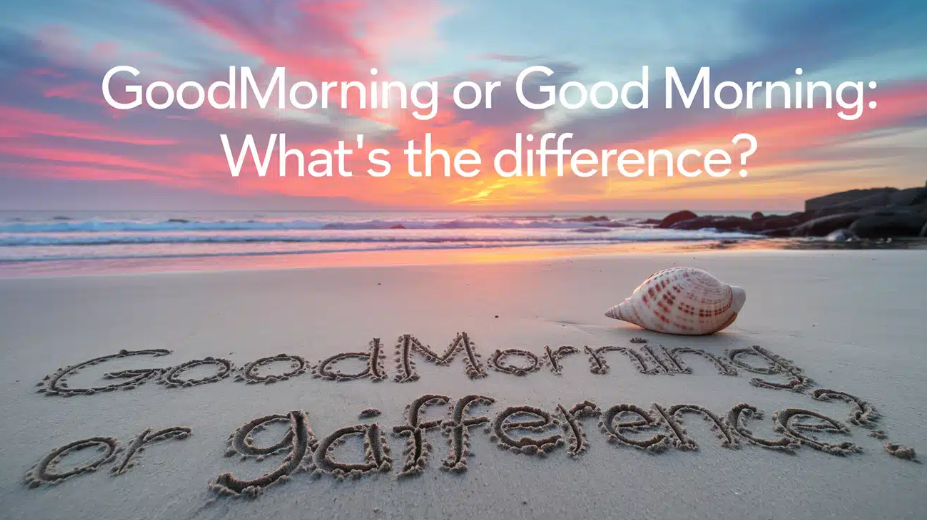
Many people feel confused about goodmorning or good morning. You may see both forms online, in texts, and on social media. This confusion is very common, especially for learners and young students. The good news is that the rule is simple once you understand it. In this guide, I will explain everything in easy words, step by step, with real examples.
I have worked with content writers and students for years, and this is one of the most asked grammar questions. People want to sound polite, correct, and confident. Using the wrong form may look careless, even if the meaning is clear. That is why knowing the correct usage of goodmorning or good morning is important for emails, school work, and daily chats.
By the end of this article, you will clearly know which one is correct, why it matters, and how to use it naturally in real life.
Is It Goodmorning or Good Morning?
The correct form is good morning. It is written as two separate words. The version goodmorning without a space is incorrect in standard English. This mistake often happens because people type fast or copy informal text from chats.
In English grammar, “good” is an adjective and “morning” is a noun. Adjectives and nouns are written separately. That is why good morning follows the same rule as “good day” or “good evening.” Understanding this makes the choice very easy.
When someone asks goodmorning or good morning, the answer is clear. Always choose good morning if you want correct and professional writing.
Why Do People Write Goodmorning Incorrectly
People often write goodmorning because of habit and speed. Social media, texting apps, and quick replies encourage short forms. Over time, wrong spelling starts to feel normal. But that does not make it correct.
Another reason is pronunciation. When we speak, “good morning” sounds like one word. This can confuse new learners. But spoken English and written English follow different rules.
If you want your writing to look polished, always use the correct form when deciding goodmorning or good morning.
Grammar Rule Behind Good Morning
The grammar rule is very simple. In English, greetings made of an adjective and a noun stay separate. “Good” describes “morning.” That is why they do not join.
Think of similar examples:
- Good night
- Good evening
- Good afternoon
None of these are written as one word. The same logic applies when choosing goodmorning or good morning. Grammar stays consistent.
This rule is trusted by dictionaries, grammar books, and language experts.
Is Good Morning Formal or Informal
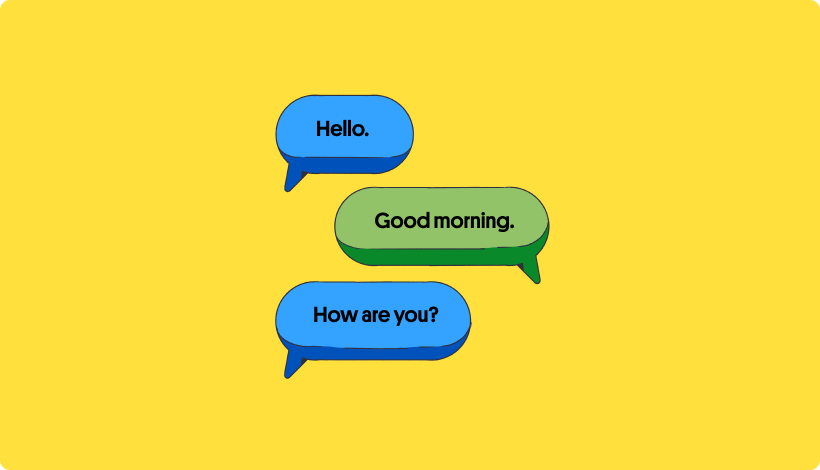
Good morning works in both formal and informal situations. That makes it very useful. You can say it to your teacher, boss, friend, or neighbor.
In emails, using good morning looks respectful and polite. In spoken English, it sounds warm and friendly. That flexibility is why it is one of the most common greetings.
No matter where you use it, the rule of goodmorning or good morning never changes.
Can Good Morning Be Capitalized
Yes, capitalization depends on where it appears. If it starts a sentence, capitalize both words. Example: “Good morning, everyone.”
If it appears in the middle of a sentence, use lowercase. Example: “I said good morning to her.”
Capitalization does not change the rule about spacing. It is always good morning, not goodmorning.
Good Morning in Emails and Messages
In emails, always use good morning as two words. This shows professionalism and care. Many hiring managers notice small details like this.
In text messages, people often shorten or misspell words. Even then, using the correct form builds good habits. It also makes your message clearer.
When choosing goodmorning or good morning for writing, emails always need the correct version.
Common Mistakes With Good Morning
The biggest mistake is writing it as one word. Another mistake is mixing capitalization, like “Goodmorning” or “good Morning.” These look incorrect and unpolished.
Some people also overthink the greeting and avoid using it. That is not needed. Good morning is safe, polite, and widely accepted.
Learning small rules like this improves your overall English quickly.
Good Morning vs Goodmorning in SEO Content
In SEO writing, correct spelling is very important. Search engines understand language better now, but readers still judge quality fast. Using goodmorning can reduce trust.
When writing blogs or articles, always use good morning correctly. This improves readability and credibility. It also follows Google’s Helpful Content standards.
So for SEO, the debate of goodmorning or good morning should never be a debate.
Real-Life Examples of Good Morning
Here are simple examples:
- Good morning, teacher.
- I wish you a good morning.
- She smiled and said good morning.
All examples use two words. That is the correct pattern every time. Real usage confirms the grammar rule.
How to Remember the Correct Form
A simple trick helps. Ask yourself: would I write “goodday”? No. Then do not write goodmorning either.
Think of “good” as a helper word describing the time of day. This mental picture makes it easy to remember.
This trick has helped many beginners choose correctly between goodmorning or good morning.
FAQs
1. Is goodmorning ever correct?
No. Goodmorning is not correct in standard English writing.
2. Which is correct: goodmorning or good morning?
Good morning is always correct.
3. Can I use good morning in formal writing?
Yes. It is polite and professional.
4. Why do people still write goodmorning?
Mostly because of fast typing and habits.
5. Is good morning one word in any dictionary?
No. Trusted dictionaries list it as two words.
6. Does spelling affect meaning?
The meaning stays clear, but correct spelling improves trust.
Conclusion
The confusion between goodmorning or good morning is very common, but the rule is simple. The correct and accepted form is good morning, written as two words. It follows basic grammar rules and works in every situation, from friendly chats to professional emails.
Using the correct form makes your writing cleaner and more trustworthy. Small details like this show care and confidence. If you remember that “good” describes “morning,” you will never make this mistake again.