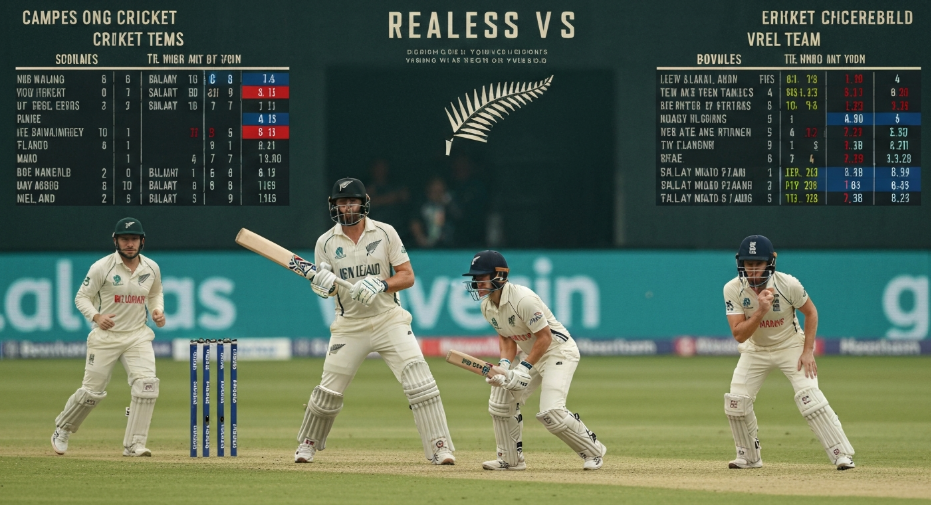
The New Zealand national cricket team vs England cricket team match scorecard is always one of the most searched topics whenever these two strong cricket nations face each other. Both teams have a long history of competitive matches across Test cricket, One Day Internationals, and T20 Internationals. Fans from around the world look closely at the scorecard to understand how the match unfolded, who performed well, and which moments changed the game.
A match scorecard is more than just runs and wickets. It tells the full story of the contest, including batting depth, bowling pressure, partnerships, and momentum shifts. In this article, we explore the New Zealand national cricket team vs England cricket team match scorecard in detail, breaking down innings performances, key players, and overall match impact.
Match Overview Between New Zealand and England
Whenever New Zealand and England meet, the match is known for its intensity and balance. Both sides play aggressive yet disciplined cricket, making the contest exciting from start to finish. The pitch conditions, weather, and team selections often play a big role in shaping the final scorecard.
In most recent encounters, England have focused on attacking batting and fast scoring, while New Zealand rely on consistency, smart bowling changes, and strong fielding. The match scorecard usually reflects this contrast in playing styles, with periods of high run rates followed by tight bowling spells.
The toss decision often proves crucial in these matches. Whether batting first or chasing, both teams plan their innings carefully, knowing that even small mistakes can be costly.
First Innings Batting Performance
The first innings of the New Zealand national cricket team vs England cricket team match scorecard usually sets the tone for the entire match. Openers aim to provide a solid start, while middle-order batters focus on building partnerships and accelerating at the right time.
England’s top order often looks to dominate early, scoring quickly during the powerplay. New Zealand, on the other hand, prefer to build their innings steadily, avoiding unnecessary risks. The scorecard from the first innings usually highlights key partnerships that helped the batting side reach a competitive total.
Extras, such as wides and no-balls, also stand out in the scorecard. These small details can make a big difference, especially in closely fought matches.
Bowling Analysis From the Opposing Team
Bowling figures are a vital part of the New Zealand national cricket team vs England cricket team match scorecard. They show which bowlers controlled the game and which ones struggled under pressure.
Fast bowlers often make early breakthroughs with the new ball, while spinners come into play during the middle overs. New Zealand bowlers are known for their accuracy and discipline, keeping the run rate in check. England bowlers, meanwhile, focus on pace variations and aggressive field placements.
Economy rate, wickets taken, and overs bowled help fans understand how effective each bowler was. A good bowling performance often shifts momentum and puts pressure back on the batting side.
Second Innings Chase or Defense
The second innings is where the match scorecard becomes even more interesting. If the team batting second is chasing a target, every run and wicket matters. The required run rate, partnerships, and fall of wickets are closely watched by fans and analysts.
In many New Zealand vs England matches, the chase goes deep into the final overs. The scorecard reflects moments of tension, such as quick wickets or sudden bursts of boundaries. Experienced players often play a key role in guiding their team through pressure situations.
If the team is defending a total, the bowling side focuses on early wickets and controlling the middle overs. The scorecard shows how the pressure builds and how batters respond.
Key Player Contributions
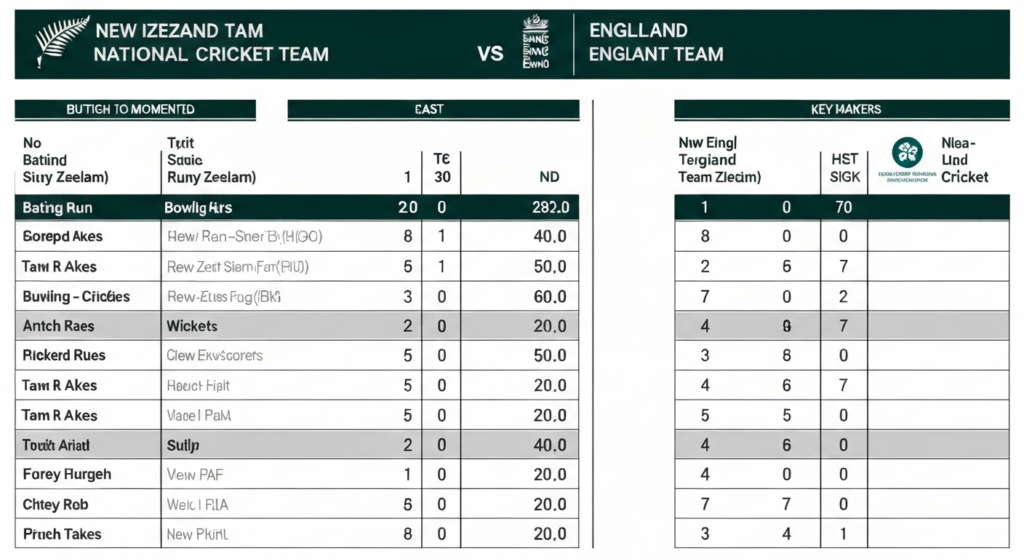
One of the most searched parts of the New Zealand national cricket team vs England cricket team match scorecard is individual performances. Fans want to know who scored the most runs, who took important wickets, and who made the difference in the field.
Top-order batters usually grab attention with big scores, but all-rounders often have a major impact as well. A player contributing with both bat and ball stands out clearly on the scorecard.
Fielding efforts, such as catches and run-outs, may not always get headlines, but they are recorded in the scorecard and often change the course of the match.
Turning Points Reflected in the Scorecard
Every match has key moments that decide the result, and these are visible when reading the scorecard carefully. A sudden collapse, a strong partnership, or a spell of tight bowling can all be identified through the numbers.
For example, losing multiple wickets in a short span can slow down scoring and shift momentum. Similarly, a partnership of fifty or more runs often stabilizes the innings and builds confidence.
The New Zealand national cricket team vs England cricket team match scorecard helps fans relive these turning points long after the match is over.
Final Result and Match Summary
The final section of the scorecard summarizes the outcome of the match. It clearly states the winning team, margin of victory, and standout performers. Whether the match ends in a thrilling chase, a comfortable win, or a narrow defeat, the scorecard captures it all.
Man of the Match awards are also included, highlighting the player who had the biggest impact. This recognition often goes to someone who performed consistently under pressure.
The match summary gives fans a quick overview while still encouraging deeper analysis of individual performances.
Importance of the Match in the Series
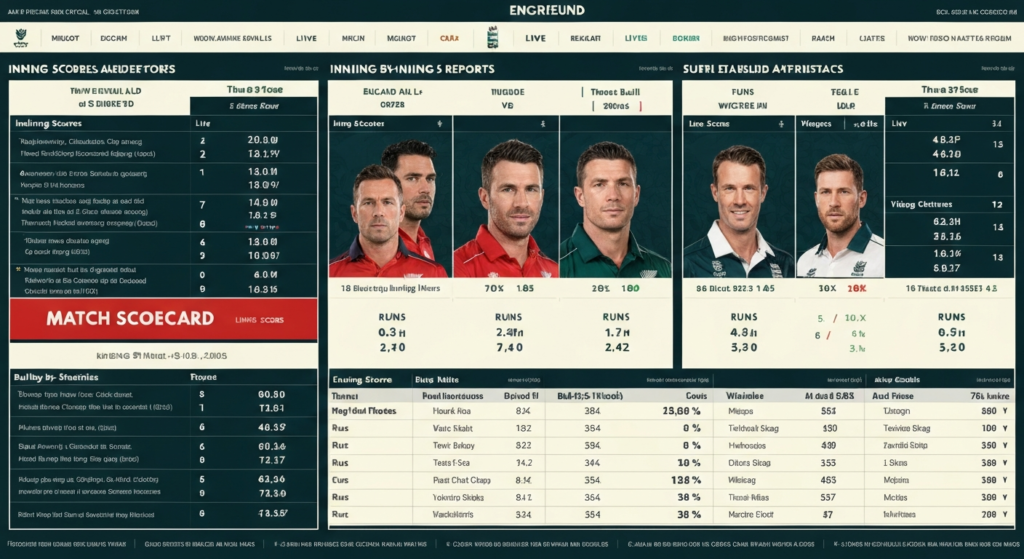
Beyond a single game, the New Zealand national cricket team vs England cricket team match scorecard often plays a role in deciding a series or tournament standings. A win can boost confidence and momentum, while a loss may force teams to rethink strategies.
These matches are also important for player rankings and team combinations. Coaches and selectors closely study the scorecard to identify strengths and areas for improvement.
For fans, each scorecard becomes part of the long and exciting rivalry between these two cricketing nations.
Conclusion
The New Zealand national cricket team vs England cricket team match scorecard gives a complete picture of how the match unfolded from start to finish. It highlights the efforts of batters, bowlers, and fielders while clearly showing the key moments that shaped the final result. By reading the scorecard carefully, fans can understand the flow of the game, the turning points, and the performances that made the difference.
Matches between New Zealand and England are always competitive, and the scorecard reflects the high level of skill and strategy used by both teams. Whether it is a strong batting display, a match-winning bowling spell, or a calm chase under pressure, every detail is recorded in the scorecard. For cricket fans, the scorecard is not just statistics—it is the story of an exciting contest between two world-class teams.
FAQs
What information does a match scorecard show?
A match scorecard shows runs scored by each batter, wickets taken by bowlers, overs bowled, extras, partnerships, and the final result of the match.
Why is the scorecard important for fans?
The scorecard helps fans understand how the match progressed, who performed well, and which moments changed the game.
Where can I find the official match scorecard?
Official match scorecards are available on cricket board websites, sports news platforms, and live score apps.
Do scorecards differ for Test, ODI, and T20 matches?
Yes, the format is similar, but details like overs, strike rates, and session summaries vary depending on the match type.
How can I read a scorecard more effectively?
Focus on partnerships, bowling economy rates, and the fall of wickets to get a clearer picture of the match flow.