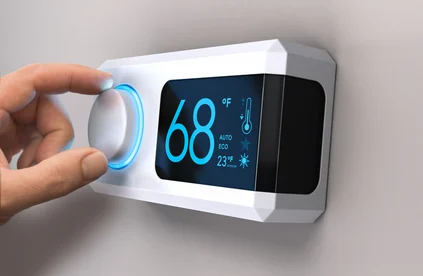
Thermostat placement affects new AC efficiency because the thermostat is the decision maker that tells the system when to run and when to stop. If it measures a temperature that is not representative of the living space, the equipment will cycle based on a false signal. That can lead to rooms that feel uneven, higher energy use, and humidity that never stabilizes, even though the system is new. A thermostat influenced by sunlight, kitchen heat, supply air drafts, or an exterior wall can shut the system off too early or run it too long. The result is wasted runtime, more starts and stops, and comfort complaints that appear to be equipment problems but are actually control problems. Correct placement helps the AC operate in longer, steadier cycles that match the home’s true average conditions.
Placement shapes the control signal.
- Common Placement Traps That Distort Temperature Readings
Many thermostat issues come from small placement mistakes that change the air the sensor is reading. Direct sun warms the thermostat housing and makes it read higher than the room temperature, forcing extra cooling. Mounting near a supply register can have the opposite effect, chilling the sensor quickly and causing the system to shut off while the rest of the home is still warm. Thermostats located near kitchens, laundry areas, or high-traffic hallways may be influenced by appliance heat, cooking, and frequent door openings, which do not reflect the main living zones. Exterior walls can also distort readings because the wall cavity may be hotter in summer and cooler in winter than the indoor air, causing the thermostat to chase wall temperature rather than room temperature. Placement near returns can create another problem if the return stream is affected by hot attic air infiltration or strong drafts, which can exaggerate temperature swings at the thermostat. These traps lead to control behavior that appears to be short cycling or poor capacity, yet the system is simply reacting to the wrong measurement point. A new AC responds quickly, so it can amplify these errors by hitting the thermostat setpoint in the wrong spot before the rest of the house catches up.
- How Bad Placement Increases Runtime, Cycling, and Humidity Drift
Efficiency depends on how smoothly the AC runs, and thermostat placement can lead to inefficient operation. If the thermostat is in a cooler microclimate, such as near a shaded hallway or a strong draft, it may turn off. That creates short cycles, which reduce humidity removal because the coil does not stay cold long enough for moisture to condense steadily. The home may reach the set temperature near the thermostat but still feel sticky, leading occupants to lower the setpoint and run the system more. If the thermostat is in a hotter microclimate, such as near a window or in a kitchen, it may call for cooling longer than needed, overcooling other rooms, and increasing energy use. Longer runtimes can be useful for humidity control, but only if the thermostat is sensing the actual average of the living space, not a localized hotspot. During many installation and troubleshooting conversations, contractors such as Metz Air Control of Chino often explain that relocating a thermostat can improve comfort and reduce energy use without touching the condenser, because the system starts running based on a more accurate picture of the home. When placement is corrected, cycles become more stable, the supply air mixes better, and the system can maintain both temperature and humidity with fewer adjustments.
- Choosing the Right Location and Why Small Changes Matter
Good thermostat placement aims for a stable, representative air sample. That typically means an interior wall away from direct sunlight, supply registers, and heat-producing appliances. The location should reflect the area you want to control, which is often a central living space rather than a hallway that changes quickly with door openings. Air movement around the thermostat matters too. If a return grille nearby creates a strong stream, the thermostat may read mixed air that changes rapidly when doors open or close. Furniture placement can also affect readings by blocking air circulation around the thermostat or by trapping heat from electronics. Sometimes a thermostat is technically central but still problematic because the room layout creates layers of warm air near ceilings or because a nearby window drafts across the sensor. Small adjustments, such as moving the thermostat a few feet, adding a deflector to a supply vent, or sealing a wall-cavity draft, can significantly change system behavior. When relocating is not practical, some homes benefit from remote sensors that average the temperature across zones, but even those need thoughtful placement to avoid reading the wrong microclimates. The core idea is that a new AC is only efficient when its control signal matches the conditions people actually experience.
Placement Fixes That Improve Efficiency
Thermostat placement impacts new AC efficiency because it determines when the system cycles and how long it runs, and those decisions affect energy use, humidity control, and comfort balance. A thermostat influenced by sun, drafts, supply air, kitchens, or exterior walls can create false readings that lead to short cycling or unnecessary runtime. Those patterns waste energy and leave rooms uneven, even with new equipment. Placing the thermostat in a stable, representative location helps maintain longer, steadier cycles, improving temperature consistency and moisture removal. Correct placement can solve many post-installation complaints without changing the AC itself.